




Types of Hibiscus - Hibiscus Wears Many Hats
What’s in a name? When it comes to Hibiscus, quite a lot. This common name encompasses several hundred species of tropical plants, hardy perennials and woody shrubs, commonly called rose of Sharon. Which types of hibiscus are you growing in your garden? This handy primer will help you spot the differences, identify which kind you have, and learn how to care for them.
In late summer and early fall, when all three types of hibiscus commonly grown in the U.S.—tropical, perennial and shrub form--are in bloom, eye popping pictures of gorgeous hibiscus flowers start swirling around the internet in abundance. People describe them with common names like dinner plate hibiscus, rose mallow, clown hibiscus, china rose, rose of Sharon, althea and many other invented names.
The one thing they all have in common name is the word “Hibiscus”, which is actually the botanical Latin name for the genus, though we’ve popularized the word in English. Think of it like the word hors d’oeuvre, which is the French word we’ve popularized for appetizer. Other than their genus, these three types of hibiscus have drastic differences that are important to understand if you want to grow them well.
Tropical Hibiscus
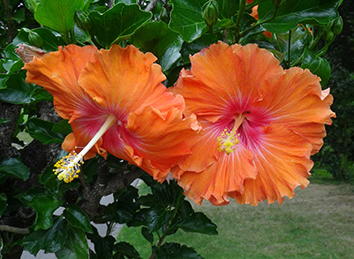
Hollywood Hibiscus® tropical hibiscus
Tropical hibiscus, botanically known as Hibiscus rosa-sinensis, are commonly grown outdoors in frost-free climates like southern Florida where they are used in foundation plantings and planted as hedges. In the north, they are often sold as summer patio plants and houseplants that can be moved outdoors in summer and back inside for winter. You may also see them sold in grafted tree form.
Tropical hibiscus flowers typically grow 4-6 inches across in shades of orange, yellow, red, pink, and bicolors. Purple and white forms are less common in tropical hibiscus plants. Their petals are often quite ruffled and many feature an eye of a contrasting color.
Hollywood Hibiscus® varieties by Proven Winners® ColorChoice® are unique in that they produce an abundance of very large, upward- and outward-facing flowers on tidy plants with glossy dark green, disease-free foliage. Spectacular flower power is the signature of this series.
Tropical hibiscus thrives in hot, humid climates and full sun. If you grow it where temperatures dip below 50°F, you can bring it indoors until summerlike temperatures return. The move from outdoors to indoors may trigger plant shock and leaf drop, but after a short resting period, it should recover fully.
Perennial Hibiscus
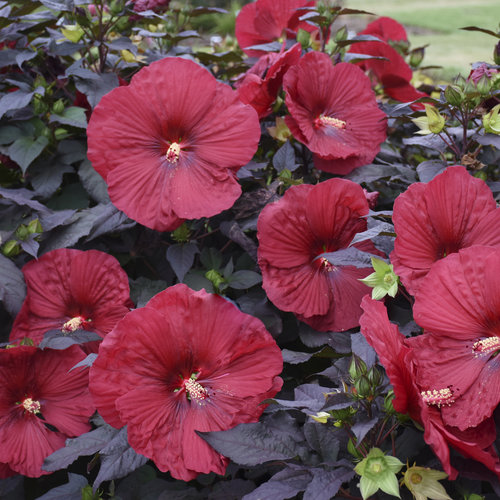

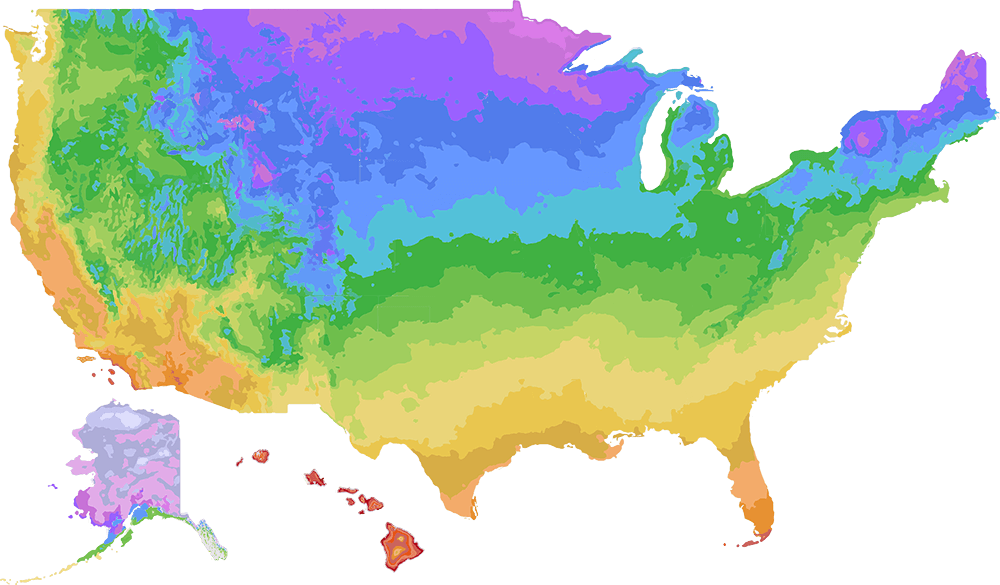
Perennial forms of hibiscus, commonly known as rose mallow or perennial hibiscus, are derivatives of native wildflowers that grow naturally in sunny, swampy areas from Minnesota to Florida, zones 4-9. Several species can be found growing in the wild, the most common of which are Hibiscus moscheutos and Hibiscus coccineus. In the wild, you could find perennial hibiscus plants that grow up to ten feet tall and have sparse foliage and flowers. The varieties you’ll find at your local garden center are hybrids of the native species.
Our Summerific® perennial hibiscus is a diverse collection of red, pink, lavender, white and bicolor varieties that have been bred to bloom for months on dense plants with interesting foliage. The huge 7-9 inch wide flowers contrast beautifully against the green, olive or deep purple foliage. Thicker, overlapping flower petals prevent the flowers from becoming shredded in summer thunderstorms.
If the hibiscus in your garden is orange or yellow, it is not a perennial hibiscus as these colors do not genetically exist in this type of hibiscus.
Hardy perennial hibiscus should be grown in the ground outdoors and given plenty of space as they typically mature to 3-5 feet tall and wide in just a few years. They make fabulous focal points in landscapes and perennial gardens. This type of hibiscus cannot be grown indoors as a houseplant like tropical hibiscus.
Deer typically pass perennial hibiscus by, but hummingbirds and pollinating bees are attracted to its colorful flowers. Rabbits may nibble on the new growth but the foliage will quickly grow out of their reach.
Full sun and consistent water are essential for growing perennial hibiscus successfully. Like the shrub form, its leaves are slow to reappear in spring but it fills out quickly once it begins. In zone 5, it may not come back up in the spring until late May. If in doubt, don't dig it up!
In the fall, leave the thick, bare stems of your perennial hibiscus plant standing. They will help to catch the fallen leaves which will insulate the crown of the plant during winter. In early spring, use a strong pair of loppers to prune the stems back to about 6 inches and remove any debris that is caught amongst its branches. The plant will regrow from underground, not from last year’s stems.
Read more about how to grow Summerific perennial hibiscus.
Join us for Summerific Week on social! Learn more.
Shrub Hibiscus


Shrub forms of hardy hibiscus, botanically known as Hibiscus syriacus, are commonly called rose of Sharon or althea. Like tropical hibiscus, shrub types of hibiscus have woody stems and a bushy form. However, rose of Sharon produces smaller, single or double flowers in greater abundance, blooming in shades of pink, purple, blue and white. Some cultivars have a contrasting eye. Like perennial hibiscus, you won’t find a rose of Sharon with yellow or orange flowers. Butterflies and hummingbirds are attracted to their blooms, particularly single forms, but deer typically pass them by.
Rose of Sharon is a hardy shrub hibiscus that should be grown in the ground outdoors in full sun in zones 5-9. It cannot be grown indoors as a houseplant like tropical hibiscus. Most varieties grow quite large, reaching heights of up to 12 feet, and are typically taller than they are wide. Some varieties like the Pillar series max out at just 4-5 feet wide but grow 10-16 feet tall. This shape makes them ideal for use along a fence line, as a screen, or as a focal point near the entryway of your home.
In northern climates, keep this shrub watered consistently through late fall so that its flowers stay beautiful and the plant is well-hydrated going into the winter months when it will lie dormant. In warmer climates, maintain average moisture levels as long as the plant is actively growing. If pruning is needed for shaping purposes, it can be done in early spring.
While reseeding can become a nuisance in some climates, many Proven Winners ColorChoice varieties of rose of Sharon like Sugar Tip®, Starblast Chiffon®, and Azurri Blue Satin® set little to no viable seed. Gardeners who enjoy growing different types of hibiscus often include these improved varieties in their landscapes. Look for these varieties if reseeding could become an issue in your garden.
Want to see more? Explore all Proven Winners® hibiscus.